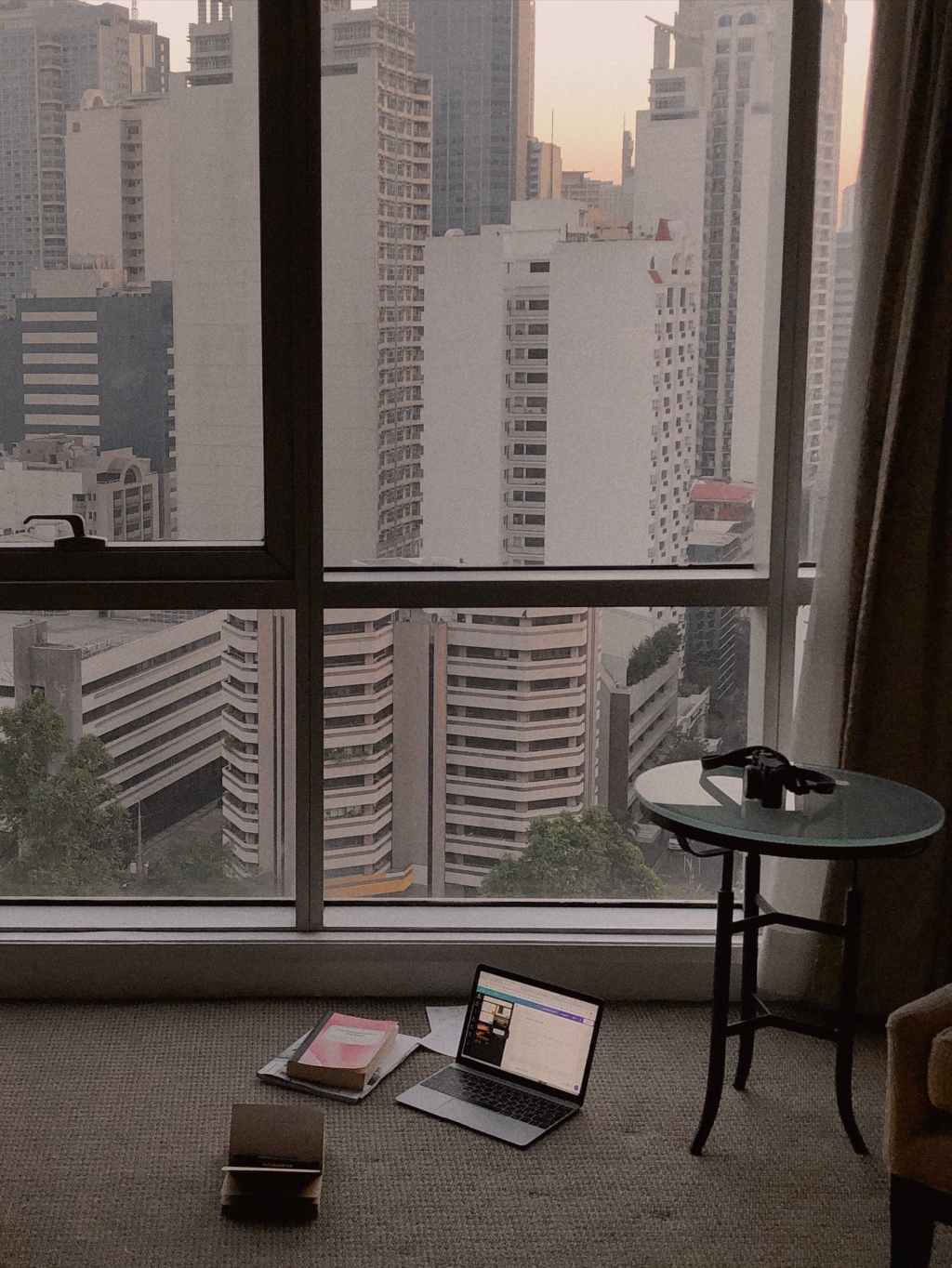
Working remotely requires discipline. For better or worse, from our school days to our adult lives we are used to being ‘watched’. Our behaviour under these conditions is unconsciously formed and adherence to structure and obedience to rules is formed at an early age. These constraints form the foundations of our adult behaviour and our working lives. Removing the constraint of being watched can be a disconcerting experience.
Working remotely doesn’t mean becoming a hermit. It means being able to manage your professional and personal lives in the most comfortable setting for yourself while still delivering the best you can for your business.
When we are allowed to watch ourselves, who watches the watcher?
How do we turn behaviours constrained by external observation into those enabled by introspection?
Self-discipline plays a large role in the answer. The discipline to manage yourself is one you have to learn. I’ve found that children without siblings show more ability initially with this. Growing up without siblings seems to provide some mental tools early which we have to otherwise learn later in life. That’s my experience but of course yours may vary. Here are some of the ways I have found which enable me to work remotely effectively:
Make a space you can work in. It doesn’t have to be a whole room. It can be a space which you can mentally define as ‘work’ during a period of time. Mine is my ‘computer desk’ where between the hours of 9am and 6pm it becomes ‘work’. Outside those hours I still use that space but its where I code or play games or learn. But inside those hours I am at work. It’s also the place I avoid when I want a break. Make sure you have a good chair and sitting position. That your screen or screens are at a comfortable position. Don’t get carried away with amazing screen resolutions, your eyes are precious so treat them with respect. Don’t try to work on purely a laptop. Invest in a good monitor with of at least 24″. I have two 24″ screens and a 32″ once. I’m also a geek so love the ‘command center’ feel of my working space.
Make a list of the day’s objectives and be realistic. You’re not trying to do everything to day. You know what you can achieve so be honest about what you’re looking to get done in any given day. Don’t feel that because you’re working remotely you have to do more than is expected of those who don’t. Most of us have used a Kanban board before as a team. Create one of yourself. I use a personal board in my corporate environment where I can create my list of things. It’s shared and people can see what I’m working on and what’s pending. They can put tasks into my ‘planning’ list if they need to. I can also reject those tasks if I need to or prioritize them as requirements evolve.
Stay off social media. It’s a killer for productivity. I restrict my browsing to defined times during the day to make sure it doesn’t interrupt what I have to accomplish. It is one of the most destructive activities to your psychology in general. Yes, unless you have to do it for work, browsing LinkedIn is still indulging in your social media habit – don’t kid yourself!
Stay connected and communicate. Just because you’re sitting at home doesn’t mean you can’t be connected to your team. I’m always on my Teams app and has my phone number listed as my ‘Status’. I have visible and audible alerts when mentions or activity in various channels occur. Don’t turn on notifications in busy channels. You’re not really interested in general chit-chat. Sometimes I only care about personal mentions because someone is trying to specifically reach me.
Talk to people instead e-mailing or using instant messages. Whenever possible I’ll call someone using Teams or the phone. Somethings are resolved or clarified much quicker. This also helps maintain your presence within that person’s mind. If you’re not physically present you must still maintain a connection and a video call can make that happen. Remember that preamble banter is ok. Don’t just launch into work topics. Take the time to connect. Remember you’re talking to a human being.
Keep emails concise. Your time is valuable. So is everyone else’s. Don’t write War and Peace in an email. Keep it short and sweet. Fluffy communication may indicate you don’t actually know what you’re trying to communicate or how that person is going to feel about it. If it feels like it’s rambling, pick up the phone and call the person. Discussing challenging topics with that person using your own voice is much more productive than using your impersonal voice. If you’re really meant to be writing that much, an e-mail isn’t the correct medium. Remember that while e-mail has the ability to send attachments, your Enterprise Content Management system is probably the better place to to collate documents and revision control them. Make life easier for yourself and others wherever possible. We’re all in this together.
Take breaks. It’s really easy to sit down at 9am and not leave your desk till 6pm. That isn’t an effective or very productive way of working. Remember to take a break every thirty minutes. Even if it’s to get a coffee or take a bio break. Have lunch and exercise. I’ll usually make myself something to eat and go for a walk. If you’re not doing a commute, the level of exercise you get in any day will drop drastically and you need to make sure you replace that. Your body is not meant to be sedentary – move it or lose it!
Stop. You are not employed to work all day every day. Sometimes when we work from home that can seem to happen. We can take calls early or late. Find we’re still working at 9pm. Overlaying our family or personal time with work activity. Our modernity has come to accept some or all of that as part and parcel of modern working practises. When you’re in an office however, you can mentally segment your day into ‘work’ and ‘life. When you’re working remotely that can disappear and you can find this melding of ‘work’ and ‘life’ becomes an onerous experience.
It’s ok to stop and turn on your Out Of Office. I have been known to set my OOO to state that ‘I am now out of the office till 9am tomorrow. If you need to contact me urgently, please call me at…‘. Making clear to anyone e-mailing something that I won’t be engaged in any activity unless it’s so urgent that they also make the effort to reach out is important.
All too often we can find people assume that as we work remotely, ‘we can just‘ take a quick look at something. This isn’t acceptable unless urgency requires an immediate response. In which case you should expect the other person to make the same effort by personally reaching out to you. I work between 9am and 6pm, Monday to Friday. Outside those hours I will only respond to calls on urgent matters.
Being on leave means just that. Being a remote worker can make it seem that you’re always on. Don’t be. When you’re on leave, make sure you take the rest and the team knows you’re not working and what the time frame is. Do yourself a favour – remove your work email app from your phone. If it’s that important, someone will call you if you’re needed.
Travel when required. Only very rarely will you never be required to travel to an office location. Having been the sole UK based employee for a company I’ve been expected to spend a few days a month on the EU mainland or in the USA. It’s good to do this. Personal presence can help to reinforce your presence within the team and the business. Personal experience of your habits can help to cement the respect others have for your remote working habits and help them evolve how their work with you. Remember if you’re going somewhere to take some time to socialise and see the sights. Every experience helps to build you. You never know where those experience will direct your life.
Finally, remember to apply the respect you expect for your working habits to those of others.



 khushil.io